
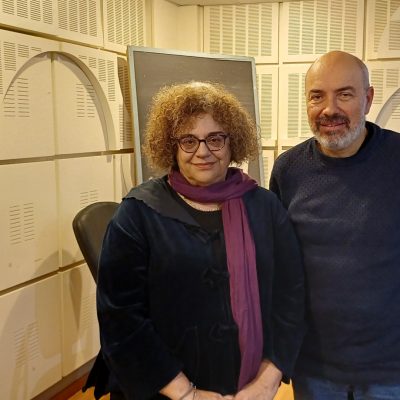
The program “Take Your Time”, hosted by Prokopis Agelopoulos, welcomed to the studio educator and author Maria Giallousi, on the occasion of her book “Shopping for Love – On Love in the Age of Artificial Intelligence”.
Below is an excerpt from the foreword of Maria Giallousi’s book, in which she states:
“Having already opened, for some time now—since the period of the first writing and publication of my book entitled ‘The Chemistry of Love’—a dialogue with various specialists from the fields of neurobiology, psychology, sociology, and political philosophy, I sought to learn about the different ways in which human beings have fallen in love throughout the world up to now, and of course about the way in which, in the age of the internet, robotics, and artificial intelligence, people think about love, talk about affection, consider marriage, and discuss and decide upon it.
Researchers argue that the change in the way we fall in love in our era is the second greatest shift in human sexual habits in history, second only to the establishment of marriage. The questions, as you can imagine, were many and overwhelming. Among them: How have people thought about sexuality throughout history? What is the interaction between romantic love and the concepts of dominance, initiative, submission, dependence, and marital relationships? How does an economic system based on the worship of consumption shape our desires and ideas, and the choice of a romantic partner? How does chemistry orchestrate passion, love, and affection? Does love at first sight exist? What is foreseen for digital, haptic erotic contact? Can robots experience emotions? Can a human being fall in love with their sex robot? What does the capitalism of companies producing sexbots seek to achieve? And what kind of emancipation and political potential exists within the discourse on love?”